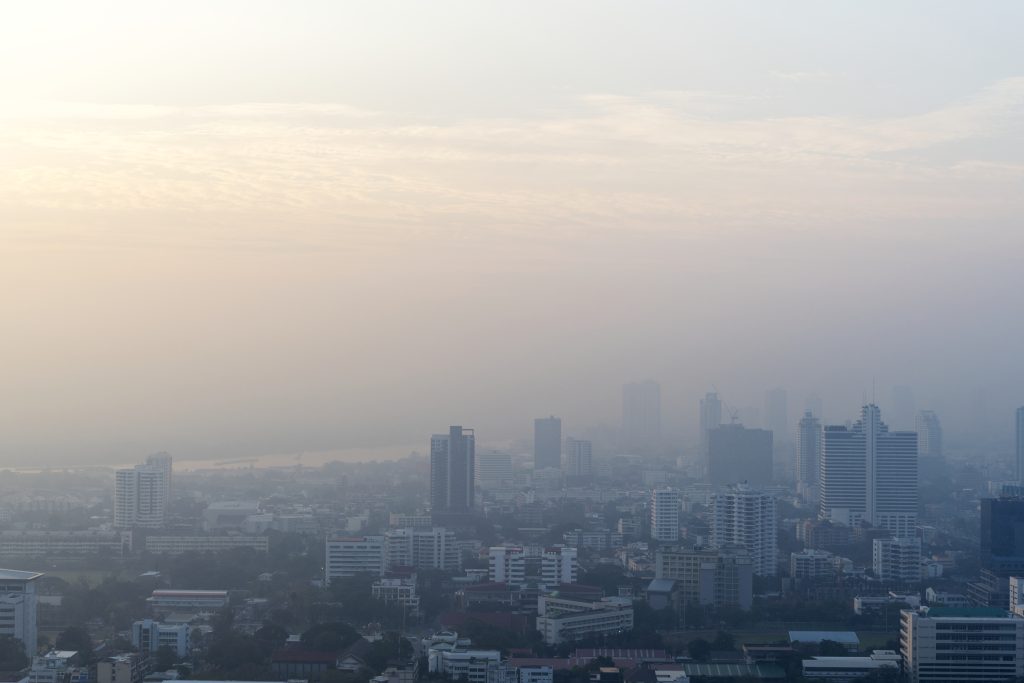
On October 21, 2025, the House of Representatives approved the Draft Clean Air Management Act (“the Draft Act”), marking another significant legal milestone for Thailand in its efforts to mitigate air pollution, especially the increasingly severe PM 2.5 problem over recent years. Air pollution has adversely affected health, including premature deaths. The World Health Organization (WHO) estimated that ambient air pollution caused over 4.2 million premature deaths globally in 2019.
The Draft Act aims to elevate clean air quality. While current applicable laws are based on the concept of controlling air pollution, this Draft Act introduces a principle focused on ‘Clean Air for Health.’ This is evident through the adoption of the Air Quality for Health Index (AQHI) for reference, thereby supporting access to clean air as a fundamental human right essential for safe living.
The key substance of the Draft Act comprises new legal concepts and structures, including the design of specific measures to manage air pollution in high-emission sectors, the use of economic mechanisms to incentivize environmentally friendly activities, the expansion of liability scopes, and the decentralization of power to local administrative organizations to manage air pollution within their respective jurisdictions.
Measures Specific to Certain Industries and Activities
The Draft Act mandates air pollution management measures for sectors with high emissions, namely: industry, transportation, forestry, agriculture, urban areas, and transboundary pollution. This includes managing air pollution originating from cross-border sources.
For example, in the agricultural sector, there is a measure prohibiting burning for harvest or plot management, unless it falls under an exempted case (such as burning to eradicate pest outbreaks).
Regarding the transportation sector, relevant government agencies must establish measures to reduce the use of fuel-based vehicles in urban areas, increase the proportion of low-emission vehicles, reduce the use of private cars, and expand public transportation systems in urban areas, among others.

The Draft Act prescribes strict penalties for non-compliance with its requirements, alongside measures to promote compliance or actions to reduce pollution. Specifically, it establishes penalties under civil law, criminal law, and administrative fines (adjustable penalties), depending on the nature of the violation.
These penalties apply to various types of polluters or contributors to air pollution, such as: the owner or possessor of the pollution source, the designer, supervisor of installation, or installer of systems or equipment related to air pollution control who directly contributes to pollution. Furthermore, the Act stipulates that financial institutions which have provided loans, financial support, or financial consultation to such polluters must also share responsibility. However, there may be grounds for exemption from liability if facts can be proven according to the conditions set forth in the law.
Although compliance with this new legal framework might initially increase business costs, if the mechanisms specified in the Draft Act are effective, they will contribute to creating incentives and business opportunities for entrepreneurs in the long run. These mechanisms include:
–Clean Air Fund: Established to support clean air management activities. Funding comes from various sources, including fees and charges collected through economic instruments and clean air measures stipulated in the Draft Act.
-Allocation, Trading and Transfer of Emission Rights in Pollution Control Zones: If an area experiences air pollution exceeding standard limits, or if air pollution exceeds the area’s capacity to absorb pollutants, the Minister of Natural Resources and Environment has the authority to declare that area subject to the system for the allocation, trading, and transfer of air pollutant emission rights. Owners or possessors of pollution sources under this system must hold sufficient rights to cover the actual quantity of air pollutant emissions, report emission data, and maintain relevant information and documentation.
–Deposit and Refund System: This mechanism temporarily collects funds from producers, operators, distributors, or consumers of specified goods or products, serving as a guarantee that those goods, products, or residual wastes will not cause air pollution. The money will be refunded to those who return the goods, products, or residual wastes for proper management.
Role of Local Administrative Organizations
Another crucial mechanism within the Draft Act is the decentralization of power to local administrative organizations (LAOs) for air pollution management. A Provincial Clean Air Committee will be established, which will possess various powers to manage clean air within each province. This includes inspecting, supervising, and controlling operations and activities that cause or may cause air pollution problems; declaring an area as an air pollution surveillance zone or an air pollution crisis zone if the air quality falls short of the established standards; and defining standards for controlling air pollution sources within their area of responsibility or specific zones.
In summary, the Draft Act represents a significant legal milestone for Thailand aimed at improving air quality for all sectors. Business operators should familiarize themselves with the various measures in the Draft Act to prepare for compliance, which may include conducting due diligence within their businesses to prevent potential risks. The law firm Baker McKenzie possesses expertise and is ready to offer consultation and assistance in identifying and managing potential risks in business operations. Our sustainability team, comprised of lawyers and engineers specializing in environmental matters, can provide guidance on the correct legal and technical approaches to risk management for long-term business sustainability.
Resource:
https://www.who.int/news-room/fact-sheets/detail/ambient-(outdoor)-air-quality-and-health