สมาคมเครือข่ายโกลบอลคอมแพ็กแห่งประเทศไทย (GCNT) ร่วมจัดการประชุมว่าด้วยการค้าทาสสมัยใหม่ ประเทศไทย ครั้งที่ 3 ซึ่งจัดขึ้นระหว่างวันที่ 12–13 มีนาคม 2569 ที่ผ่านมา ด้วยความร่วมมือกับพันธมิตรหลายภาคส่วน อาทิ โครงการอาเซียน-ออสเตรเลีย เพื่อต่อต้านการค้ามนุษย์ (ASEAN-ACT) สำนักงานอัยการสูงสุด กระทรวงยุติธรรม สถานเอกอัครราชทูตออสเตรเลียประจำประเทศไทย องค์การระหว่างประเทศเพื่อการโยกย้ายถิ่นฐาน (IOM) มูลนิธิไอเจเอ็ม (IJM) องค์กร A21 โครงการ Australian Aid และองค์กรพันธมิตรอื่นๆ เพื่อรวมตัวผู้มีส่วนได้ส่วนเสียจากภาครัฐ ภาคเอกชน และภาคประชาสังคม มาหารือเกี่ยวกับกลยุทธ์ในการแก้ไขปัญหาทาสสมัยใหม่และอาชญากรรมทางการเงินที่เกี่ยวข้อง โดย GCNT ได้ร่วมเสวนาใน 3 เวที ดังนี้
- เวที HRDD ในภาคปฏิบัติ: ประสบการณ์จริงจากภาคธุรกิจและห่วงโซ่อุปทาน โดยมีดร.พงศ์ศิริ วรพงศ์ Head of Sustainability Strategic Intelligence จาก SCBX และสมาชิก GCNT ได้ร่วมแบ่งปันแนวทางที่สถาบันการเงินบูรณาการกระบวนการ HRDD เข้ากับการบริหารจัดการความเสี่ยง โดยเน้นย้ำถึงความสำคัญของการทำความเข้าใจความเสี่ยงด้านสิทธิมนุษยชนในทุกภาคส่วน และการสร้างความมั่นใจว่าโครงการขนาดใหญ่จะได้รับการสนับสนุนผ่านการตรวจสอบอย่างเหมาะสม การประเมินโดยผู้เชี่ยวชาญจากภายนอก และการมีส่วนร่วมของผู้มีส่วนได้ส่วนเสีย
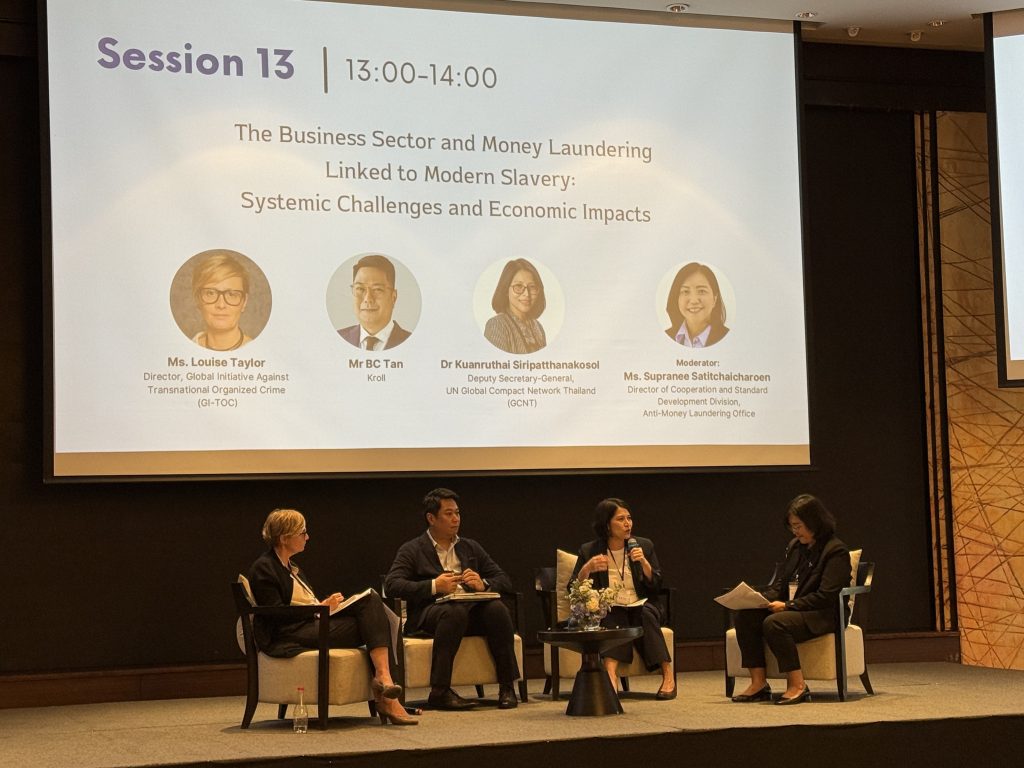
- เวที ภาคธุรกิจและการฟอกเงินที่เกี่ยวข้องกับแรงงานทาสยุคใหม่: ความท้าทายเชิงระบบและผลกระทบทางเศรษฐกิจ โดยคณะผู้อภิปรายประกอบด้วยตัวแทนจาก Global Initiative Against Transnational Organized Crime (GI-TOC), Kroll และ ดร.ขวัญฤทัย ศิริพัฒนโกศล รองเลขาธิการ GCNT โดยการหารือมุ่งเน้นไปที่การสร้างห่วงโซ่อุปทานที่สะอาดและโปร่งใส ซึ่งจะช่วยเสริมสร้างขีดความสามารถในการแข่งขันของประเทศไทย ควบคู่ไปกับการลดความเสี่ยงของการฟอกเงินและการละเมิดสิทธิมนุษยชน
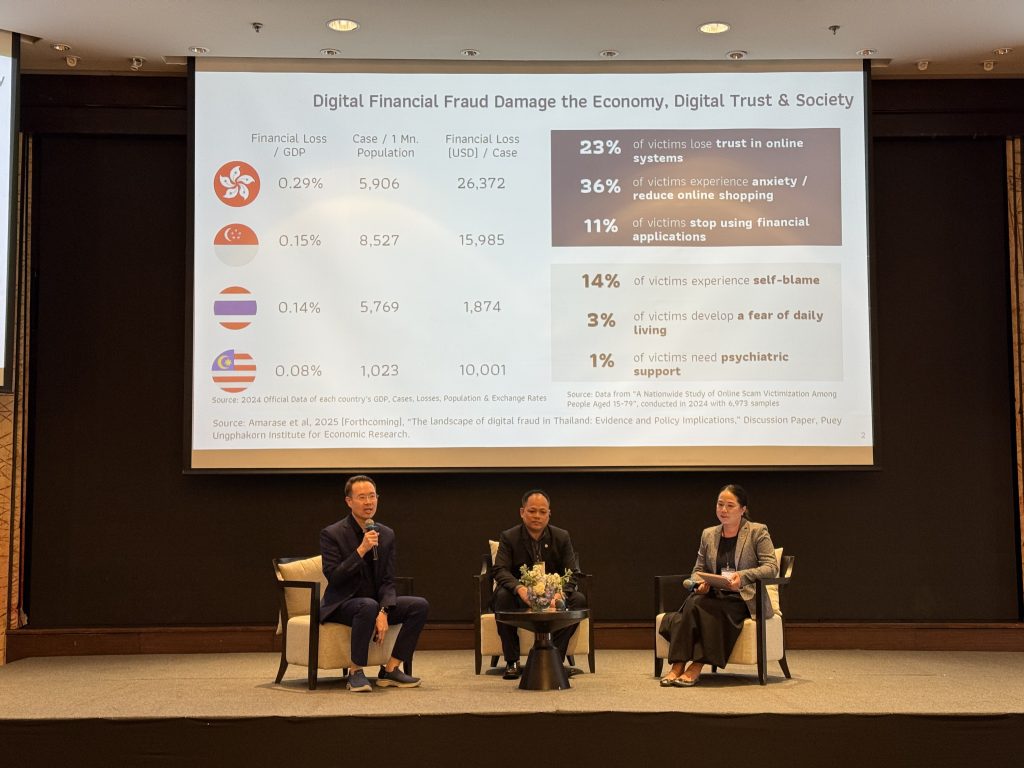
- เวที ภาคธุรกิจที่เกี่ยวข้องกับอาชญากรรมทางการเงินที่เกี่ยวข้องกับการค้าทาสยุคใหม่: เส้นทางเงินเทาที่ผ่านเข้ามาจากการค้าทาสยุคใหม่ในประเทศไทย ดำเนินรายการโดย คุณเพ็ญพิชชา จรรย์โกมล ผู้จัดการโปรแกรมด้านธุรกิจกับสิทธิมนุษยชนและการต่อต้านคอร์รัปชันของ GCNT ร่วมกับตัวแทนจากธนาคารแห่งประเทศไทย สำนักงานป้องกันและปราบปรามการฟอกเงิน (ปปง.) และ UNDP FAST เพื่อหารือถึงความเชื่อมโยงระหว่างทาสสมัยใหม่กับอาชญากรรมทางการเงิน รวมถึงความสำคัญของความร่วมมือระหว่างหน่วยงานกำกับดูแล สถาบันการเงิน และภาคธุรกิจ เพื่อจัดการกับกระแสการเงินที่ผิดกฎหมาย
การหารือในครั้งนี้ย้ำเตือนถึงความจำเป็นในการยกระดับความร่วมมือระหว่างหน่วยงานกำกับดูแล สถาบันการเงิน ภาคธุรกิจ และผู้มีส่วนเกี่ยวข้องอื่นๆ เพื่อป้องกันและจัดการความเสี่ยงด้านทาสสมัยใหม่ โดยการเข้าร่วมของ GCNT ในครั้งนี้เป็นการยืนยันถึงความมุ่งมั่นในการส่งเสริมแนวปฏิบัติทางธุรกิจที่รับผิดชอบ และเสริมสร้างพันธมิตรเพื่อจัดการกับความเสี่ยงด้านทาสสมัยใหม่ทั้งในประเทศไทยและในห่วงโซ่อุปทานระดับโลก
(English version below)
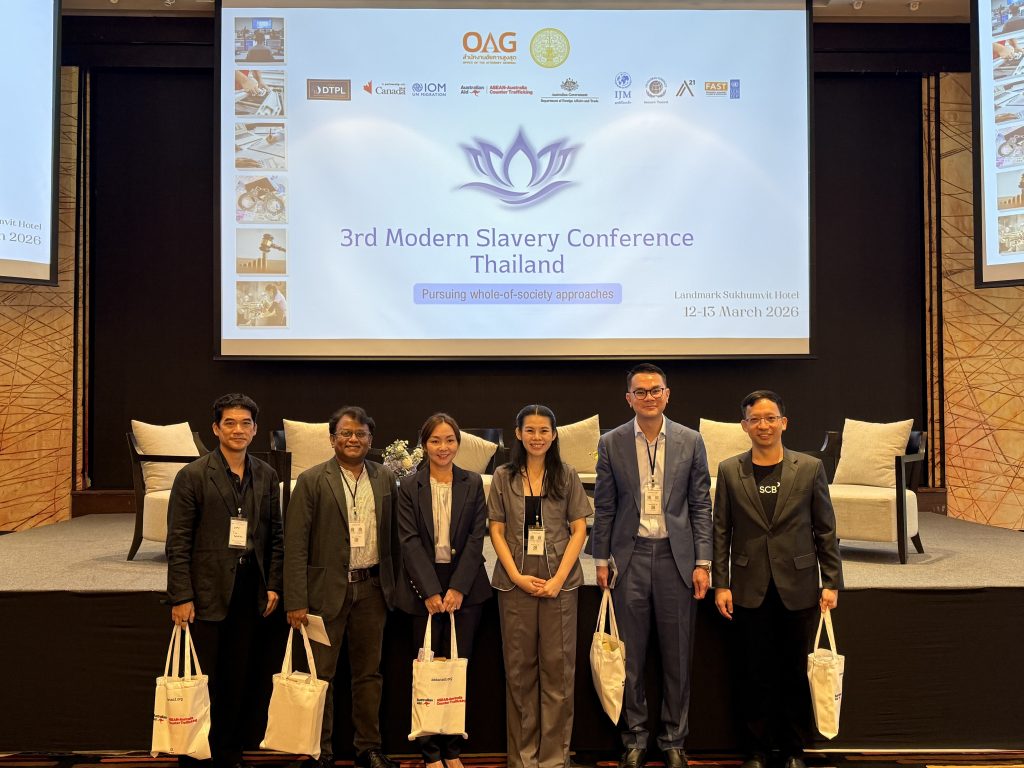
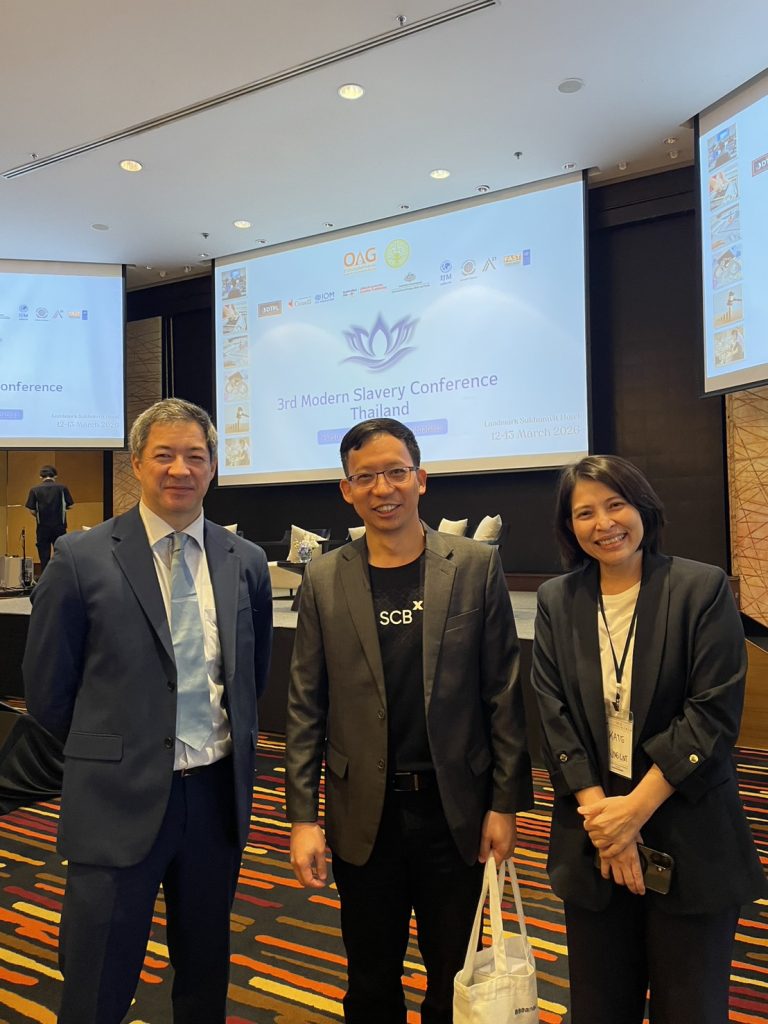
UN Global Compact Network Thailand (GCNT) took part as a co-host and panel contributor at Thailand’s Third Modern Slavery Conference, held on 12–13 March 2026. The conference, organized together with partners including ASEAN-ACT, the Thailand Office of the Attorney General, the Ministry of Justice, the Embassy of Australia in Thailand, International Organization for Migration, International Justice Mission, A21 Campaign, Australian Aid, and other partner organizations, brought together stakeholders from government, the private sector, and civil society to discuss strategies to address modern slavery and related financial crimes.
During Session 12: HRDD in Practice – Shared Responsibility Across the Value Chain, Dr. Pongsiri Vorapongse, Head of Sustainability Strategic Intelligence at SCBx and a GCNT member, shared how financial institutions integrate Human Rights Due Diligence (HRDD) into risk management. He highlighted the importance of understanding human rights risks across sectors and ensuring that large-scale projects are supported by proper due diligence, external expert assessments, and stakeholder engagement.
Session 13: The Business Sector and Money Laundering Linked to Modern Slavery – Systemic Challenges and Economic Impacts, the panel featured representatives from Global Initiative Against Transnational Organized Crime (GI-TOC), Kroll, and Dr. Kuanruthai Siripatthanakosol, Deputy Secretary-General of GCNT. The discussion emphasized how clean and transparent supply chains can strengthen Thailand’s competitiveness while reducing risks of money laundering and human rights violations.
Meanwhile, Session 14: Private Sector Engagement in Financial Crimes Linked to Modern Slavery: Grey Money Flows from Modern Slavery in Thailand was moderated by GCNT Programme Manager for Business & Human Rights and Anti-Corruption Phenpiccha Jankomol, who facilitated a discussion with representatives from the Bank of Thailand, the Anti-Money Laundering Office Thailand (AMLO), and UNDP FAST on the links between modern slavery and financial crimes and the importance of collaboration between regulators, financial institutions, and businesses to address illicit financial flows.
The discussion emphasized the need for stronger cooperation between regulators, financial institutions, businesses, and other stakeholders to prevent and address modern slavery risks. Through its participation, GCNT reaffirmed its commitment to promoting responsible business practices and strengthening partnerships to address modern slavery risks in Thailand and global supply chains.